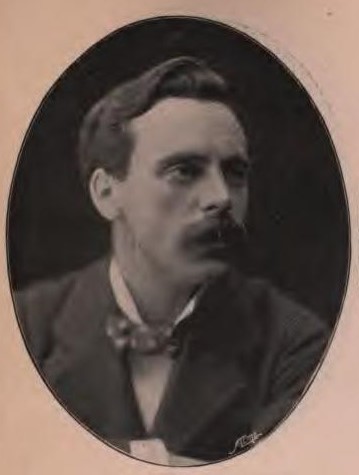
 Walford Davis Green (August 24, 1869 – November 17, 1941) was a British barrister, Conservative politician, and historical writer whose life spanned
elite academic circles, parliamentary service, and corporate leadership.
Walford Davis Green (August 24, 1869 – November 17, 1941) was a British barrister, Conservative politician, and historical writer whose life spanned
elite academic circles, parliamentary service, and corporate leadership.Queer Places:
University of Cambridge, 4 Mill Ln, Cambridge CB2 1RZ
Walford Davis Green (August 24, 1869 – November 17, 1941) was a British barrister, Conservative politician, and historical writer whose life spanned
elite academic circles, parliamentary service, and corporate leadership.
Born on August 24, 1869—with records noting his birth in Ealing, Middlesex and registration in Brentford—he was the eldest son of the Reverend Walford Green, a prominent Wesleyan Methodist clergyman and sometime president of the Wesleyan Methodist Conference, and Eleanor Davis.
His educational path began at The Leys School in Cambridge before he entered King’s College, Cambridge, as an exhibitioner, matriculating in October 1888. At Cambridge, he immersed himself in elite intellectual and social networks, notably becoming a member of the prestigious Cambridge Apostles, a secretive and highly influential intellectual discussion society. He achieved academic distinction by taking the History Tripos and graduating with an honors B.A. in 1891, subsequently winning the Members' Prize that same year for his historical essay on George Canning, which was later expanded into a published book. He earned his M.A. in 1913.
Following his university years, Green prepared for a legal career, being called to the Bar at the Inner Temple on January 28, 1895. Transitioning swiftly into public life, he successfully contested the 1895 general election as the Conservative and Unionist Member of Parliament for the borough of Wednesbury in Staffordshire. He held his seat through the 1900 election, serving in the House of Commons until 1906. Though initially intending to retire ahead of the 1906 election on health grounds—and briefly courted by local Unionists to reconsider when his successor fell ill—he stepped down permanently from parliamentary politics. In addition to his political career, he lectured in history at the Westminster Training College in Cambridge and later engaged heavily in commerce, serving as the chairman of the Tamworth Colliery and several other corporate entities.
Beyond politics and business, Green maintained a literary output, authoring biographical and historical studies including The Political Career of George Canning and William Pitt, Earl of Chatham. In his personal life, he married Annie Lilian Carpenter in May 1896 in Bishopsteignton, Devon. In his later years, he resided in Langton Green, Kent, where he passed away on November 17, 1941, at the age of 72.
Green's membership in the Cambridge Apostles places him squarely within a historic network that, particularly from the late 19th through the mid-20th century, served as a vital nexus for intellectual homosociality and the cultivation of same-sex desires and romantic homosocial bonds among Cambridge elite. While public heteronormative milestones such as his marriage to Annie Lilian Carpenter defined his official biography, elite university societies like the Apostles provided a confidential space for homosocial intimacy and homically progressive thought during a restrictive Victorian and Edwardian era.
References:
 The Cambridge Apostles, 1820-1914: Liberalism, Imagination, and Friendship in British Intellectual and Professional Life 1st Edition by W.C. Lubenow |
Other references:
Support this project
This website is a passion project researched, developed, and funded entirely by me. If you find the content valuable and would like to help support the ongoing research and hosting costs, any contribution is deeply appreciated.
Thank you for keeping this independent resource alive!
My books on Amazon: Elisa Rolle's books